


Product Specification:
1. DURABLE MATERIAL:
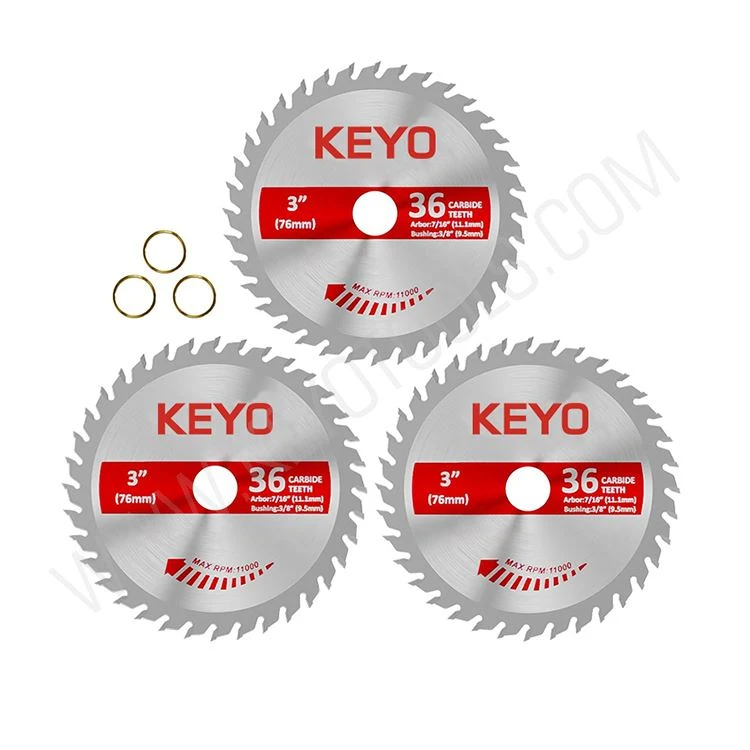
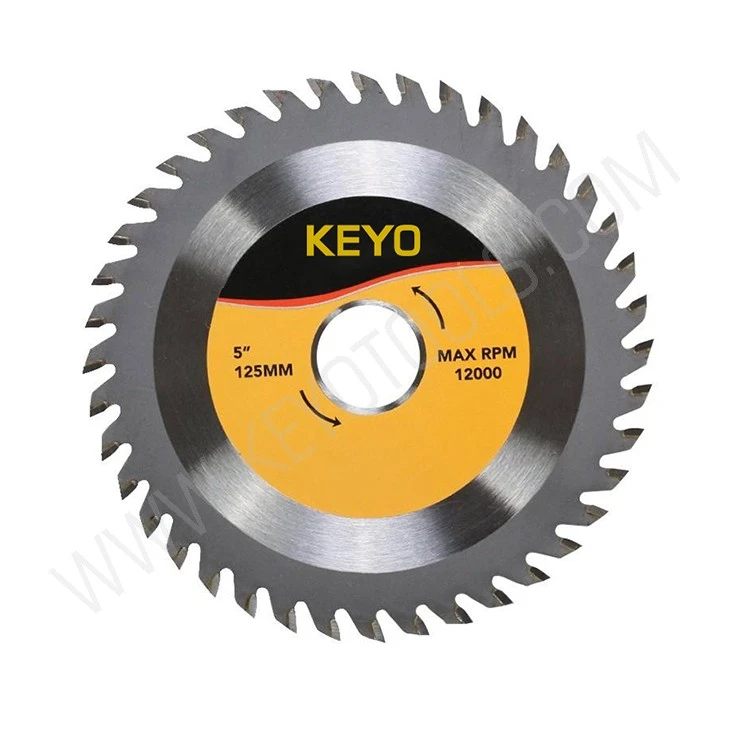
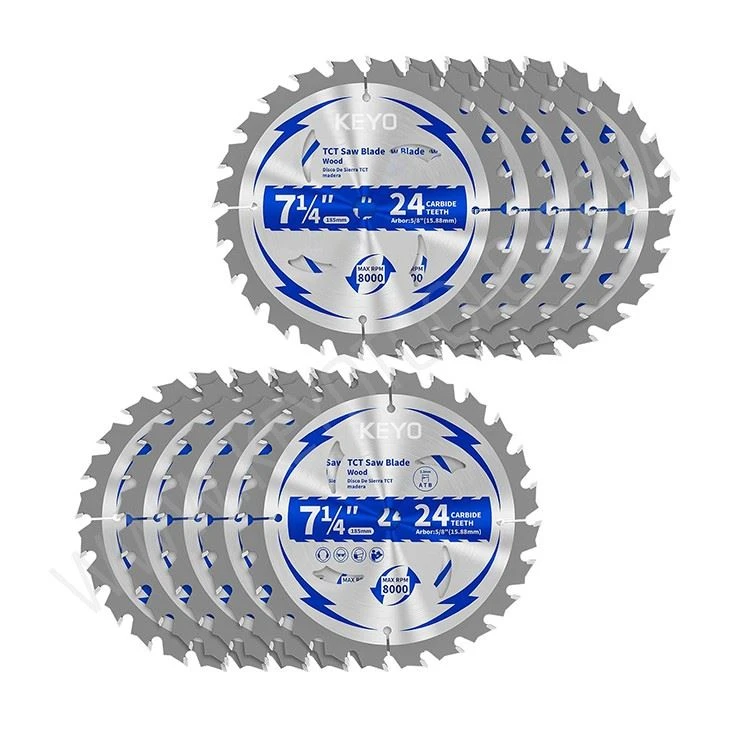
Circular saw blades are made of durable premium alloy steel material, with hardened and sharper construction-grade tungsten carbide teeth and resists bending and deflection for true cuts for effective woodworking; Fully polished and chrome plated surface provides a long-lasting usage life
2. EFFECTIVE CUTTING:
Super thin laser cut kerf gives extremely fast, durable, and clean cuts, ensure smooth, fast and accurate cutting with impressive results.;The higher degree of finish edge adopted brings higher cutting efficiency and effect, enabling the blades to rip cut along the grain
3. QUIET & LONGER LIFE:
Equipped with noise-reducing perforations helps minimize noise pollution and provide a more comfortable work environment; Our saw blades are engineered with thermal expansion grooves that promote better heat dissipation, offering longer service life and better cutting performance
How to Choose the TCT Circular Saw Blades for wood working? You can select the correct saw blade model according to the following key parameters:
Blade Diameter
The blade diameter determines the maximum cutting depth. Common sizes include 165mm, 185mm, 190mm, 210mm, 235mm, 255mm and 305mm. Larger blades provide deeper cutting depth. Always match the blade diameter to your circular saw, table saw or miter saw specifications.
Bore / Arbor Diameter
The arbor hole must perfectly match your machine spindle. Standard bore sizes are 16mm, 20mm, 22.23mm (5/8"), 25.4mm (1") and 30mm. If the bore size does not fit your tool, a reducer ring can be used for adaptation. For example, a 30mm blade can be converted to fit 25.4mm, 25mm, 20mm or 16mm spindles.
Kerf Width
Kerf refers to the actual material width removed during cutting, equal to the tip thickness of the saw teeth. Common kerf ranges from 1.1mm to 3.2mm. Thin kerf blades (under 2.4mm) save material and require less power, ideal for cordless and low-power saws. Full kerf blades (over 3.1mm) feature thicker teeth for higher durability, suitable for heavy-duty cutting and high-power table saws.
Plate / Body Thickness
This is the thickness of the saw blade steel body, usually 0.4mm to 1.0mm thinner than the kerf width. For example, a 2.8mm kerf blade normally has a 1.8mm plate thickness. The body thickness directly affects blade rigidity and cutting stability.
Number of Teeth
Tooth quantity decides cutting speed and finish quality.
- 10–30 Teeth (Ripping Blades): Fast cutting speed with efficient chip removal, slightly rough finish. Best for ripping solid wood and thick lumber.
- 30–60 Teeth (Combination Blades): Balanced speed and cutting finish. Universal design for both cross cutting and ripping general wood materials.
- 60–90+ Teeth (Crosscut / Fine Cut Blades): Ultra-smooth, tear-free cutting surface with slower feed speed. Perfect for cross cutting, trimming, veneer panels and fine finishing work.
Tooth Geometry
Tooth type defines cutting performance and material suitability, which is critical for accurate blade selection.
- ATB (Alternate Top Bevel): Alternating bevel teeth for clean cross cutting.
- FTG (Flat Top Grind): Flat top teeth optimized for fast ripping.
- TCG (Triple Chip Grind): Durable triple-chip tooth design for tough composite materials.
- ATB+R / ATBR (Combination Tooth): Mixed ATB and raker teeth, balances ripping and crosscut performance for general-purpose woodworking.
Maximum RPM
Each blade is marked with a maximum safe rotation speed. The blade's max RPM must be equal to or higher than your machine's no-load speed. Larger-diameter blades support lower maximum RPM and should never be used on high-speed tools.
Surface Coating
PTFE or TiN coating reduces friction and heat buildup during cutting. It prevents wood resin adhesion, rust and blade wear, especially helpful when cutting resin-rich wood such as pine.
Hot Tags: tct circular saw blades, China tct circular saw blades manufacturers, suppliers, factory