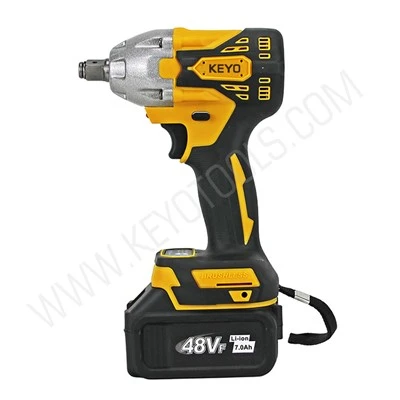
For novice end-users and wholesalers or purchasing agents new to the power tool industry, these three products look very similar and are easily confused. Below is a clear distinction based on core functions and structural design:
Core Functional Differences
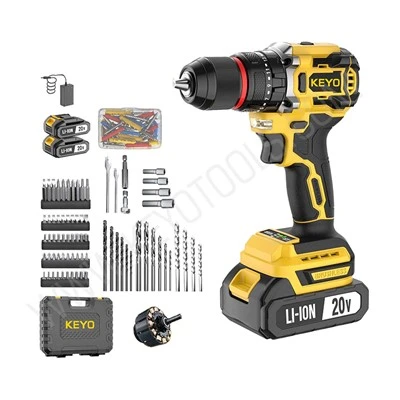
Drill Driver
Performs purely rotary operations; lacks an impact mechanism. Features adjustable torque settings suitable for both drilling and light-to-medium-duty screwdriving tasks (e.g., drilling into wood or metal and general screw assembly/disassembly).
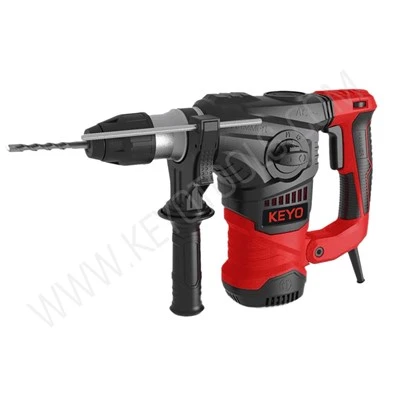
Impact Drill
Combines rotation with axial (forward-and-backward) hammering action. Primarily designed for drilling into brick walls and lightweight concrete; supports mode switching to disable the impact function for standard drilling tasks.
Impact Driver
Combines rotation with rotational (tangential) impact force. Focused on high-torque screwdriving and driving heavy-duty screws or bolts; not suitable for standard drilling operations.
Structural Differences
Drill Driver
Uses a three-jaw metal chuck; accommodates both round-shank drill bits and screwdriver bits.
Impact Drill
Also equipped with a three-jaw metal chuck; compatible with masonry bits for wall drilling.
Impact Driver
Uses a 1/4" hex quick-release chuck; accepts only hex-shank bits and cannot directly hold round-shank drill bits.
The market offers "2-in-1" models (drill driver + impact function) and "3-in-1" combo models (integrating drilling, impact, and screwdriving). Purchasing agents should select the appropriate tool model by considering the needs of their target customers and their own product portfolio.