When choosing between brushed and brushless motors for handheld electric drills, each type offers distinct advantages. A detailed analysis follows:
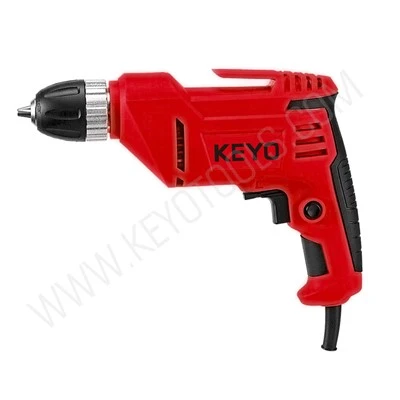
Brushed motors: During operation, the coils and commutator rotate, while the magnets and carbon brushes remain stationary. The switching of the current direction within the coils is achieved through the interaction of the rotating commutator and the carbon brushes.
Brushed motors: As a traditional technology, they offer stable performance. Brushless motors, representing an upgrade, surpass brushed motors in terms of lifespan and durability. However, brushless motors feature more complex control circuitry and require stricter screening for component aging.
Brushless motors: Comprising a motor unit and a driver, these are classic examples of mechatronic integration. Because brushless DC motors operate via self-control, they do not require the starting windings found on synchronous motor rotors, nor do they suffer from oscillation or loss of synchronization during sudden load fluctuations.
Brushless motor applications: Widely used in environments requiring high cleanliness standards-such as cleanrooms in the dairy, brewing, meat processing, soy product processing, beverage, and pastry industries, as well as in pharmaceutical manufacturing and precision electronics factories. For instance, DIHOUR brushless motor hand dryers are frequently used in such industrial settings.
Carbon-brush motor applications: Primarily suitable for less demanding environments, such as restrooms. They are unsuitable for workshops with strict dust-proof or explosion-proof requirements, such as cleanrooms.
Service life: Brushless motors can operate for approximately 20,000 hours, with a typical lifespan of 7–10 years. Carbon-brush motors have a service life of about 5,000 hours, with a typical lifespan of 2–3 years.
Energy efficiency: Brushless motors consume only about one-third the power of carbon-brush motors. In a brushed electric drill, the motor supplies power to the rotor coils via carbon brushes contacting the copper commutator segments on the stator; this interaction with the stator creates a rotating magnetic field that drives the rotor-and consequently the drill bit-to spin.