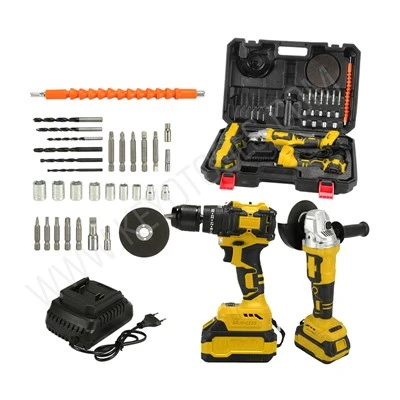
The rotational speed of a cordless angle grinder significantly impacts performance, directly determining operational efficiency, precision, consumable lifespan, and safety.
Speed Selection Logic for Different Applications
Cutting Operations
High Speed (8,000–12,000 rpm): Suitable for cutting thin metal sheets, thin solid wood boards, and plastic sheets. It offers fast cutting speeds but carries a higher risk of edge chipping and excessive burrs on the cut surface.
Low Speed (3,000–6,000 rpm): Suitable for cutting thick metal profiles, hardwood, and stone. It provides a smoother cut with fewer burrs, though operational efficiency is reduced by 30%–50%.
Grinding and Polishing Operations
Rough Grinding and Rust Removal: Speeds of 7,000–10,000 rpm can be used to quickly remove rust, welding slag, and old coatings.
Fine Polishing and Paint Surface Sanding: Medium-to-low speeds of 4,000–7,000 rpm are required to prevent surface overheating/discoloration and excessive wear on the polishing wheel.
Specialized Material Operations
Applications such as grinding carbon fiber composites or precision hardware components require low speeds of 2,000–4,000 rpm to prevent material delamination or surface scratching.
Impact of Speed on Consumables and Safety
Consumable Wear: High-speed operation generates greater centrifugal force on grinding discs and polishing wheels, accelerating wear rates to 2–3 times that of low-speed modes and increasing the risk of disc bursting.
Safety Limits: Grinding discs have rated safe peripheral speed requirements. For a standard 100mm disc, the safe peripheral speed is approximately 35 m/s, corresponding to a maximum permissible no-load speed of about 11,000 rpm; exceeding this limit triggers motor overload protection and poses a safety hazard.
Battery Runtime: Low-speed operation places a higher load on the motor; consequently, for the same battery charge, runtime is 10%–15% shorter compared to high-speed mode.
Guidelines for Practical Operation and Adjustment
Select the rotational speed primarily based on the workpiece material and precision requirements; for example, a speed of 9,000–10,000 rpm is recommended for cutting thin stainless steel sheets, while 4,000–5,000 rpm is recommended for cutting thick cast iron parts.
For models with variable speed settings, it is recommended to start in a low-speed mode and gradually increase the speed to suit operational needs.
Do not operate the equipment above its rated maximum speed for extended periods, as this can damage the motor and lead to safety accidents.