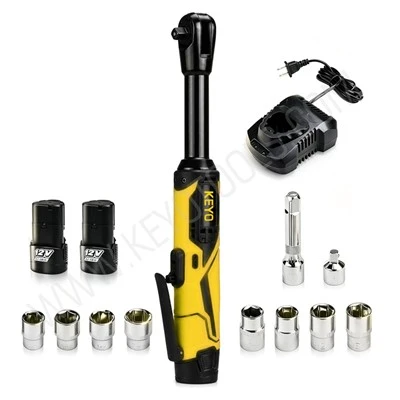
The handheld electric drill is a type of handheld power tool and represents the highest-selling product category in the power tool industry; it is widely used in sectors such as construction, renovation, and furniture manufacturing. These drills are powered by either an AC power supply or a DC battery. In a single-phase drill motor, the rotor winding is connected in series with the field winding via carbon brushes; when AC or DC power is applied, the interaction between the magnetic flux generated by the field winding and that of the rotor winding produces torque, causing the motor to spin. A reduction gearbox then lowers the speed while increasing torque to drive the rotation of the drill bit. A variable-speed switch adjusts the load's average current or power-thereby controlling light brightness or motor speed-by varying the duty cycle of the output square wave; this method, known as Pulse Width Modulation (PWM), ensures high circuit efficiency.
Some modern electric drills utilize cordless lithium-ion technology and electronic battery protection systems, enabling real-time monitoring of current, voltage, temperature, and leakage during operation. Certain models feature a spindle lock function that immobilizes the spindle and tool chuck when the power switch is disengaged. Additionally, some products include an active braking function that halts chuck rotation immediately upon the release of the trigger switch. Key technical specifications for electric drills typically include maximum torque and maximum drilling diameters for various materials.